
Blogs
Wood Pressed vs
Cold Pressed Oil:
Is There Really a Difference?
Table of Contents
Toggle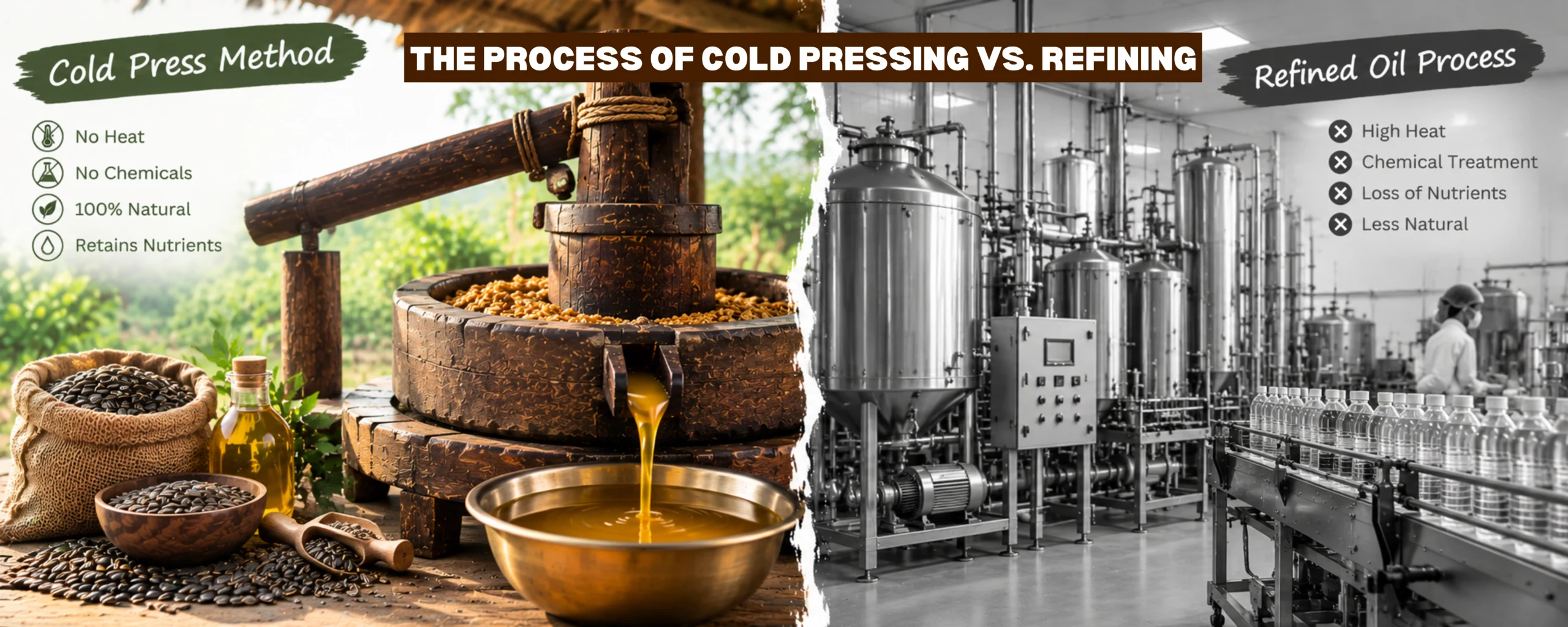
What Each Term Technically Means
“Cold pressed” refers to any mechanical extraction process kept below a defined temperature threshold (typically under 49°C), regardless of the type of press used — it can be a modern steel screw press or a traditional wooden ghani. “Wood pressed” (kachi ghani in Hindi) specifically refers to the traditional wooden or stone mortar-and-pestle style press, which by its slow mechanical nature also happens to stay cold. In practice, virtually all wood-pressed oil is cold pressed, but not all cold pressed oil is wood pressed — some use faster steel expeller presses that still qualify as “cold” if temperature stays controlled.
Does the Press Material Actually Change Nutrition?
The nutrient retention difference between wood and steel cold-pressing is smaller than most marketing suggests — the critical factor is temperature control during extraction, not the material of the press itself. What genuinely differs is extraction speed and yield: wood pressing is slower and yields less oil per kg of seed, which is why wood-pressed oil typically costs more — you’re paying for lower throughput, not necessarily a nutritionally superior product.
Kachi Ghani: The Term You’ll See Most on Mustard Oil
For mustard oil specifically, “kachi ghani” is a regulated FSSAI term requiring extraction without heat pre-treatment, preserving the oil’s natural pungency and allyl isothiocyanate content (the compound responsible for mustard oil’s characteristic sharpness and some of its antimicrobial properties). GreenDumbells Mustard Oil is produced kachi ghani style — genuinely cold and slow-pressed — which is the specific claim worth verifying rather than just trusting the words “wood pressed” on a label.
How to Verify What You’re Actually Buying
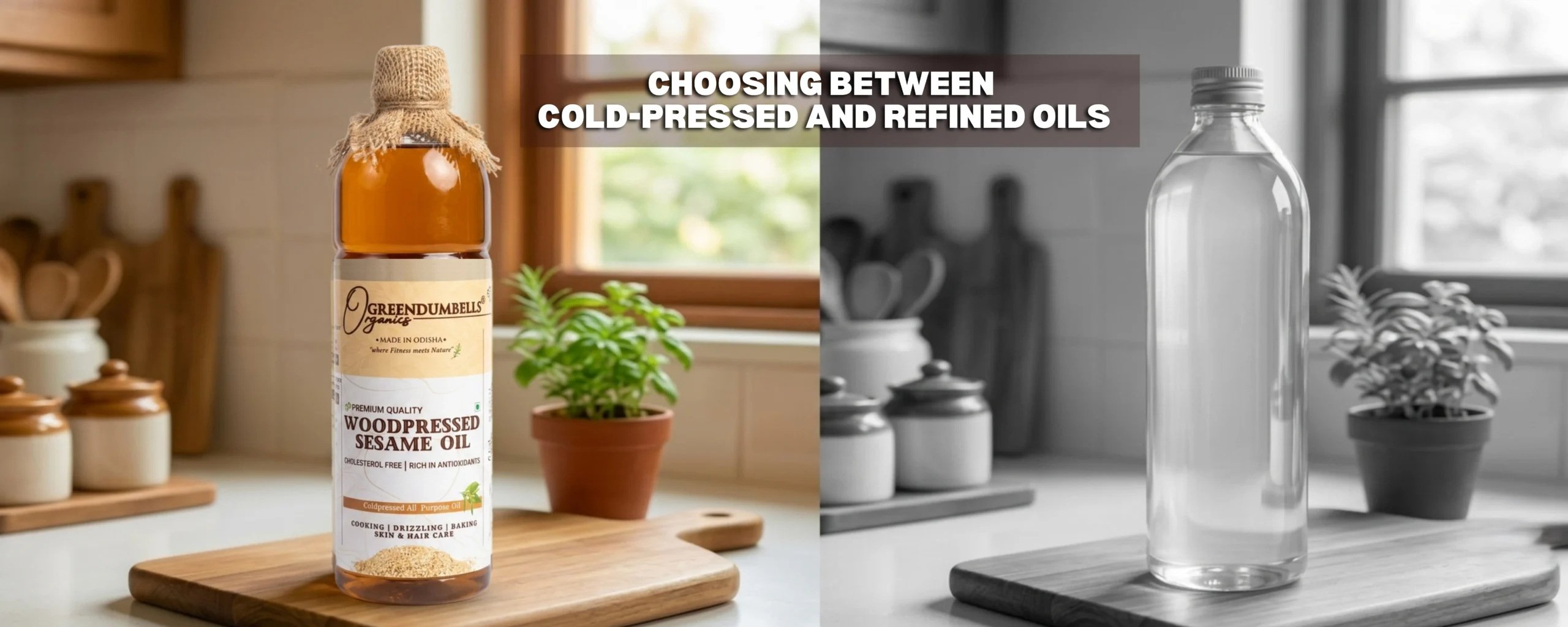
Check for the FSSAI “kachi ghani” designation on mustard oil specifically — it’s a regulated term, unlike generic “wood pressed” branding elsewhere. For other oils, look for stated extraction temperature or an explicit “no heat, no chemical” claim on the label rather than assuming the word “wood” guarantees it. Price is a rough proxy too: genuine wood-pressed oil’s lower yield means it rarely competes on price with mass-market refined oil — if a “wood pressed” oil is priced close to refined oil, be skeptical.
GreenDumbells Kachi Ghani & Cold Pressed Range
- GreenDumbells Kachi Ghani Mustard Oil
- GreenDumbells Cold Pressed Groundnut Oil
- GreenDumbells Cold Pressed Sunflower Oil
Frequently Asked Questions
Is wood pressed oil always better than steel cold pressed oil?
Not necessarily nutritionally — both stay below the heat threshold that damages nutrients. Wood pressing mainly differs in slower yield and often higher price, not proven superior nutrient content.
Why is wood pressed oil more expensive?
Lower extraction yield per kg of seed and slower production speed mean higher per-litre cost compared to steel expeller cold pressing.
Is kachi ghani the same as cold pressed?
Kachi ghani is a specific, FSSAI-recognised term for traditional slow extraction (mainly used for mustard oil) that is inherently cold pressed, but not every cold pressed oil uses the kachi ghani method.
How can I tell if my mustard oil is genuinely kachi ghani?
Check the label for the explicit FSSAI kachi ghani designation and look for the oil’s characteristic strong pungency — heavily refined or heat-treated mustard oil tends to smell noticeably milder.
Does GreenDumbells use wood pressing or steel cold pressing?
GreenDumbells’ mustard oil uses the traditional kachi ghani (wood/stone) method; groundnut and sunflower oils use temperature-controlled cold press extraction.