
Blogs
How to Identify
Pure Cold Pressed Oil:
5 Simple Home Tests
Table of Contents
Toggle
Why Home Testing Matters Even When You Trust the Brand
Even reputable brands can have batch inconsistencies, and loose, unbranded “cold pressed” oil sold at local markets carries the highest adulteration risk since it bypasses FSSAI batch testing entirely. These five tests won’t replace lab analysis, but together they catch the majority of common issues: dilution with refined oil, heat damage during extraction, and outright mislabeling.
Test 1–2: Refrigerator Test and Smell Test
Refrigerator Test: Place a small sample in the fridge for 2-3 hours. Genuine cold pressed groundnut and mustard oil will partially solidify or turn cloudy due to natural fat content; refined oil blended in stays clear and liquid even when chilled, since refining removes the components that solidify at low temperature.
Smell Test: Genuine kachi ghani mustard oil has a sharp, pungent, almost eye-watering aroma when opened. A mild, near-odourless mustard oil is a strong sign it’s been heat-refined or diluted.
Test 3–5: Colour, Sediment, and Label Test
Colour Test: Genuine cold pressed oil has a deeper, slightly cloudy natural colour and can vary marginally batch to batch. Refined oil is uniformly clear and bright — suspiciously perfect colour consistency across bottles is a flag.
Sediment Test: A small amount of natural sediment settling at the bottom over time is normal for unfiltered cold pressed oil; zero sediment ever, across multiple bottles, suggests industrial filtration beyond what cold pressing alone produces.
Label Test: Check for the FSSAI license number, kachi ghani declaration (for mustard oil), and batch/manufacturing date — genuine producers display all three clearly; vague or missing batch information is a red flag regardless of brand claims.
What to Do If Your Oil Fails a Test
A single failed test isn’t automatically proof of adulteration — batch variation is normal. But if an oil fails two or more of these tests consistently across bottles, stop using it and report to local FSSAI authorities if it was purchased loose or from an unregistered seller. For branded oil, contact the manufacturer directly with the batch number; a transparent producer will address the concern rather than deflect it.
GreenDumbells Cold Pressed Oils
- GreenDumbells Kachi Ghani Mustard Oil — passes the smell and refrigerator test consistently due to genuine cold extraction.
- GreenDumbells Cold Pressed Groundnut Oil
- GreenDumbells Cold Pressed Sunflower Oil
Frequently Asked Questions
Does the refrigerator test work for all cold pressed oils?
It’s most reliable for groundnut and mustard oil, which have higher saturated/monounsaturated fat content that solidifies at low temperatures. Sunflower oil solidifies less clearly, so rely more on the smell and label tests for it.
Is a little sediment in cold pressed oil safe to consume?
Yes, natural sediment from unfiltered pressing is normal and not a safety concern — it’s actually a sign of minimal processing.
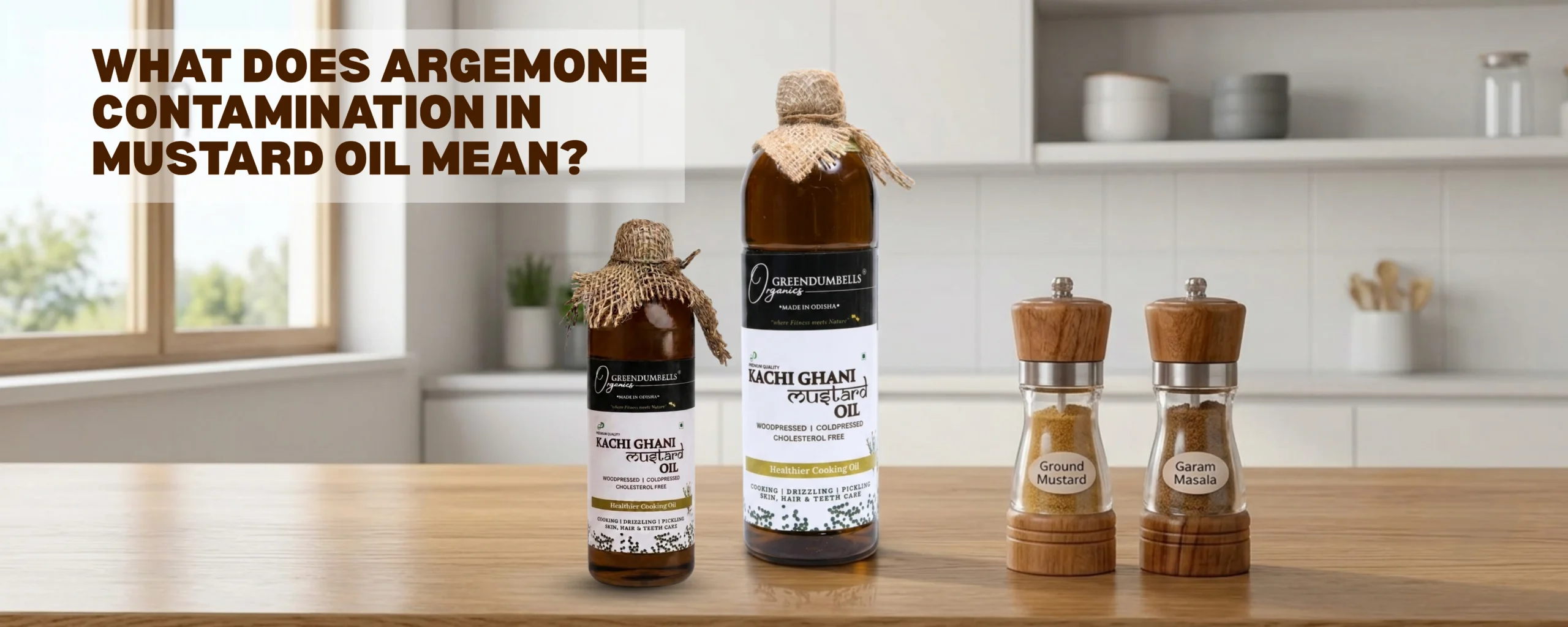
What does argemone contamination in mustard oil mean?
It’s contamination from argemone (prickly poppy) seeds accidentally or fraudulently mixed into mustard seed before pressing, historically linked to serious health incidents in India, which is why FSSAI mandates strict testing and traceability for mustard oil specifically.
Can I test oil purity without any tools at home?
Yes — all five tests here use only a refrigerator, your nose, natural light, and the label, no special equipment required.
Is GreenDumbells oil tested for purity before sale?
Yes, as an FSSAI-licensed producer, GreenDumbells oils undergo batch testing and carry visible FSSAI licensing and batch information on every bottle.