
Blogs
Build a Chemical-Free
Indian Kitchen:
Complete 2026 Guide
Table of Contents
Toggle
A chemical-free kitchen isn’t about paranoia or throwing out your spice box — it’s a practical, room-by-room, jar-by-jar swap you can complete over a few weekends. This guide walks through exactly what to change first, what to leave alone, and where the actual evidence supports the switch.
The Four Pantry Categories That Matter Most
Refined oils, refined sugar, processed table salt, and additive-heavy packaged spices account for the overwhelming majority of “hidden chemical” intake in a typical Indian household — far more than any single packaged snack. Refined oils go through bleaching, degumming, and deodorising using solvents like hexane; cold pressed and wood-pressed alternatives skip that chain entirely, retaining natural antioxidants that refining strips out.
Oils and Salt: The First Two Swaps
Start with cooking oil, since it touches nearly every dish. GreenDumbells Cold Pressed Groundnut, Mustard, and Sunflower oils are extracted mechanically at low temperature with no solvent step, unlike refined oil which is chemically processed for a neutral taste and long shelf life at the cost of natural nutrients. Next, replace iodised refined table salt with Himalayan pink salt or unrefined sea salt, which retain trace minerals lost in industrial refining — a small swap with an outsized effect on flavour depth in home cooking.
Sweeteners and Spices: The Next Two Swaps
Refined sugar is essentially stripped of everything except sucrose. Sulphur-free jaggery, by contrast, retains iron and trace minerals from the sugarcane it’s made from, and its slower digestion profile is gentler on blood sugar spikes than refined sugar — a genuinely meaningful swap for a country with rising diabetes prevalence. For spices, check labels for anti-caking agents and “permitted class II preservatives” — many single-estate or small-batch masalas skip these entirely.
A 4-Weekend Rollout Plan for Indian Households
Weekend 1: Replace your primary cooking oil with a cold pressed alternative — don’t try to switch every oil at once, start with whatever you use daily.
Weekend 2: Swap table salt and white sugar.
Weekend 3: Audit your masala shelf and replace the three most-used spice jars.
Weekend 4: Tackle snacks and packaged breakfast items — this is where oats, granola, and nut butters replace biscuits and namkeen cut with palm oil.
This staged approach avoids the sticker-shock and decision fatigue of trying to overhaul everything on day one.
GreenDumbells Products for a Chemical-Free Switch
Frequently Asked Questions
Is switching to a chemical-free kitchen expensive?
The upfront per-item cost is higher, but because cold pressed oils and jaggery are used in smaller effective quantities for the same flavour intensity, the monthly grocery difference is usually modest, not dramatic.
What should I switch first if I can only change one thing?
Cooking oil — it touches the largest share of meals and has the clearest processing gap between refined and cold pressed versions.
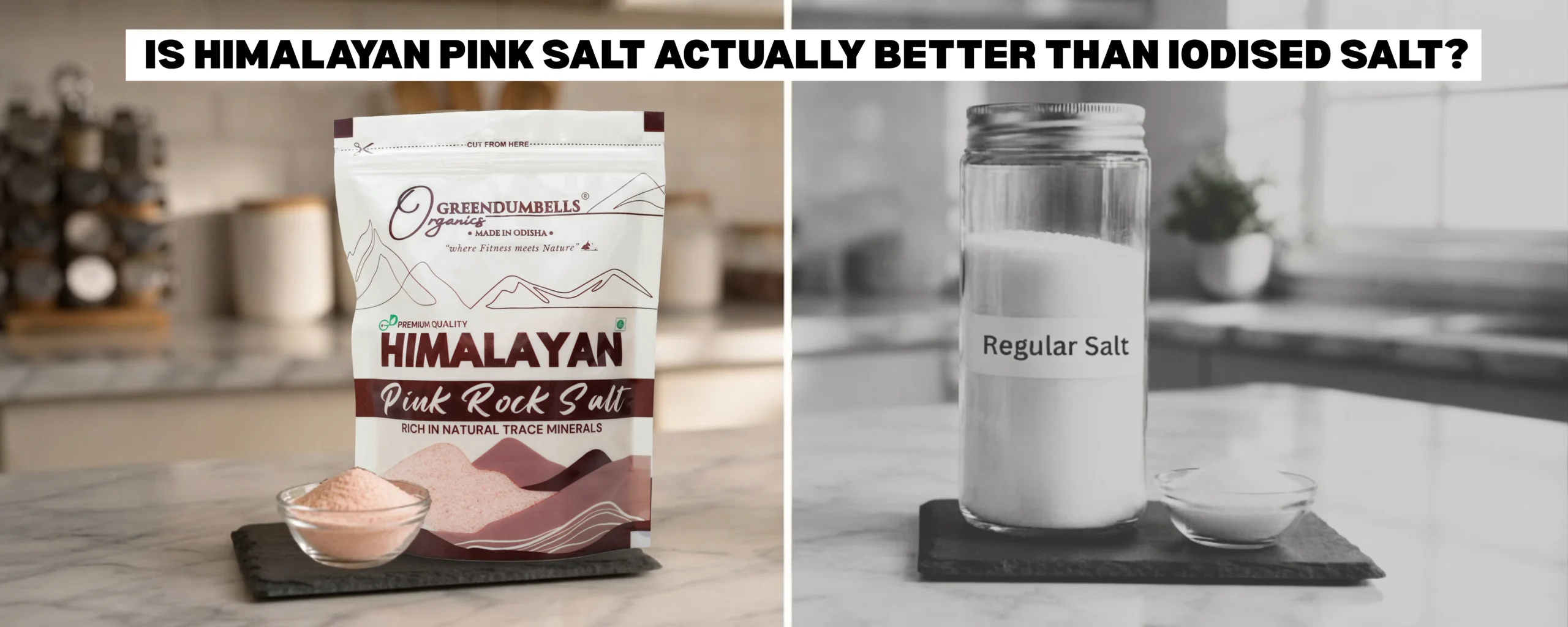
Is Himalayan pink salt actually better than iodised salt?
It retains more trace minerals, but iodised salt serves a specific public health purpose in preventing iodine deficiency — many households use both, pink salt for finishing and iodised for staple cooking.
How long does a full kitchen switch realistically take?
Following the 4-weekend plan above, most families complete a meaningful switch in about a month without disrupting daily cooking.
Where can I find all these products in one place in Odisha?
GreenDumbells stocks cold pressed oils, jaggery, oats, and peanut butter together at greendumbells and across 700+ counters in Bhubaneswar and Odisha.